This was to be my last big motorbike trip. It was 2013 and it marked the end of a wonderful few years of two-wheeled petrol powered adventures across Europe and North Africa.
Before I tell you about it, I should probably rewind a bit…
The year before, I’d taken a solo motorbike trip to a Horizons Unlimited Meet in Greece and chatting to someone there about the long journey to ride across Europe to get there, I found out about a train that ran from the Netherlands to Slovenia—the Autoslaaptrein. You could load your bike on, sleep overnight, and wake up almost in the Balkans. It sounded too good an experience to ignore and so that’s what planted the seed for this trip. I decided I’d go on my trail bike, a Yamaha 250 Serow, in case I encountered any off-road routes, and that proved to be fortuitous.
And this was the plan, vaguely ……
Out of Fuel
The ride from the Rotterdam ferry to Den Bosch was meant to be straightforward. A couple of hours on the bike, then onto the train south. But about halfway there, the fuel gauge dipped past empty and the bike sputtered to a stop. No petrol, no plan B. I think I had some notion that the bike shouldn’t have a tank full of petrol on the train.
I was standing by the roadside, wondering what next, and frantically calculating how long it was before the train (the one train a week train!) would depart, when another motorcyclist pulled over. I had a spare can, he had the kindness to give me a lift. We rode to the nearest petrol station—and that’s when I realised I’d left my wallet back with the bike.
Without missing a beat, he paid. No fuss, no judgement.
Back at the bike, all I could offer in return was a crumpled tenner in sterling and a deeply British apology. To this day, I owe a stranger a tank of petrol and my dignity.
The Train to Slovenia
I boarded the Autoslaaptrein in Den Bosch, my motorbike securely loaded onto the car carrier at the rear. These sleeper trains—now discontinued—were a blend of practicality and nostalgia, offering an overnight journey across Europe that felt like stepping into a bygone era.
Each compartment accommodated six passengers, with an attendant stationed in a small cabin at the end of the carriage, near a compact bathroom. A narrow corridor ran alongside the compartments, providing glimpses of the passing scenery. Hot meals, pre-ordered and delivered in cardboard boxes, were brought around by the attendant, who also sold beers—a welcome addition to the evening’s camaraderie.
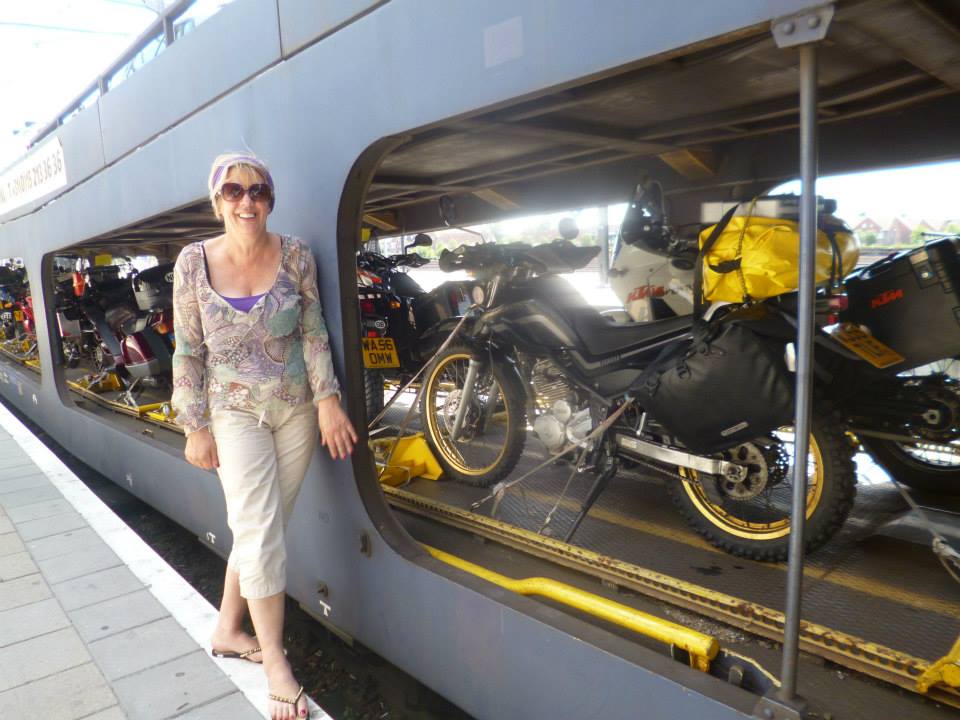
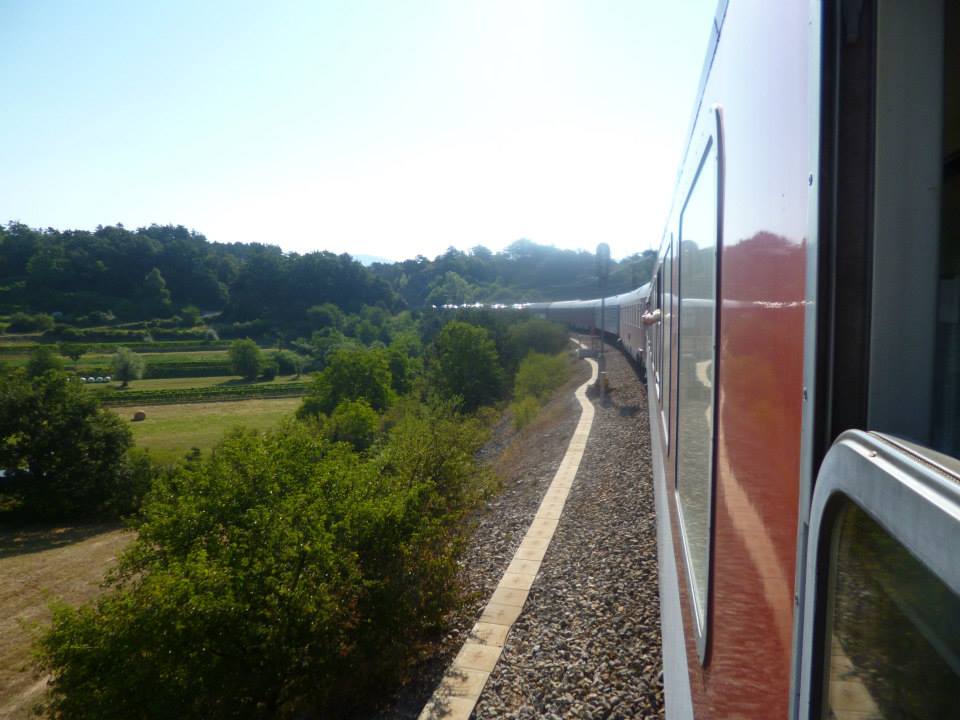
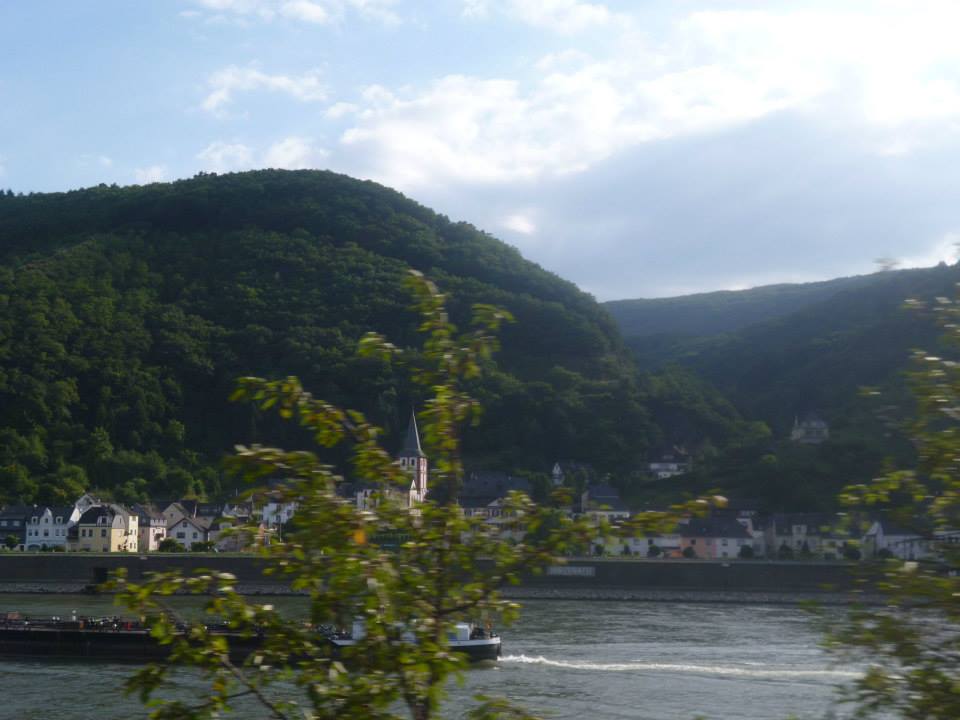
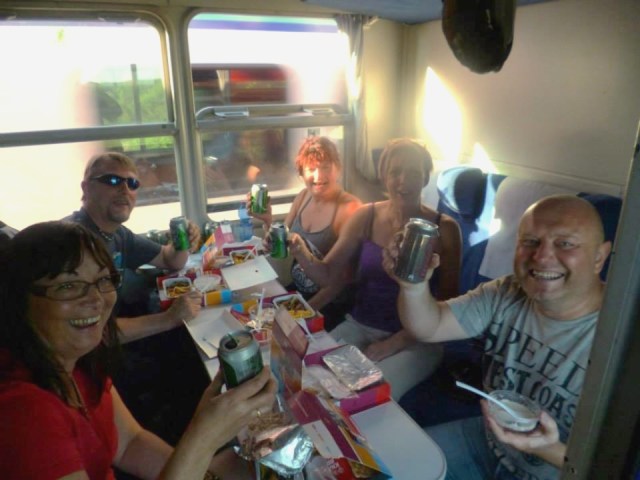
Sharing the compartment with two couples, we quickly bonded over shared stories and laughter. One couple, Rich and his partner, turned out to be members of the Horizon Unlimited community and we had friends in common in the UK. The other couple, also motorcyclists, though not English-speaking, joined in the convivial atmosphere, proving that enthusiasm transcends language barriers.
As night fell, the attendant transformed our compartment into a six-berth sleeping area. Families in other compartments who had travelled with their cars brought along duvets and pillows, turning their spaces into cozy, mobile sleepovers. .
The journey was more than just transportation; it was an experience—a moving snapshot of Europe’s landscapes and cultures. Standing in the corridor, we could see our vehicles on the trailer behind, a comforting sight as the train wound its way through European valleys
I was saddened to learn that the Autoslaaptrein ceased operations in 2015, but grateful to have been part of its final chapters.
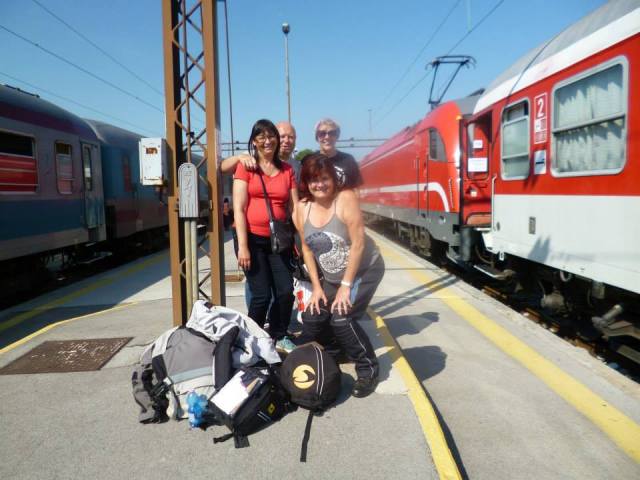
A Sobering Chapter in a Beautiful Landscape
After leaving the train and bidding farewell to my new friends—with plans to reunite at the end of my journey—I packed up my bike and headed down the coast, setting up my tent by the sea at Senj. It felt great!
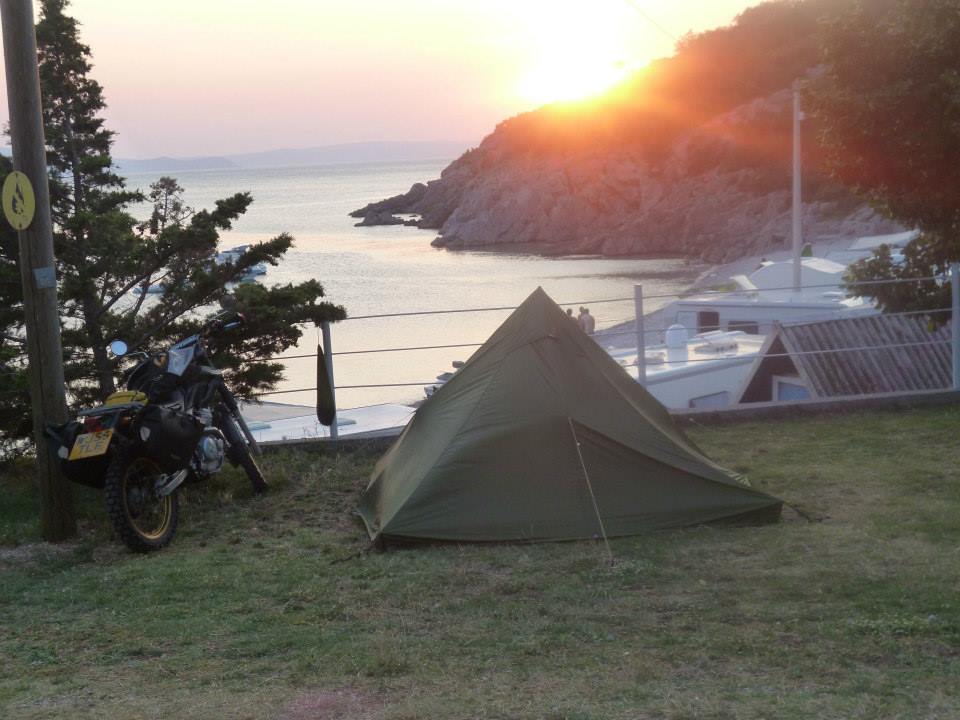
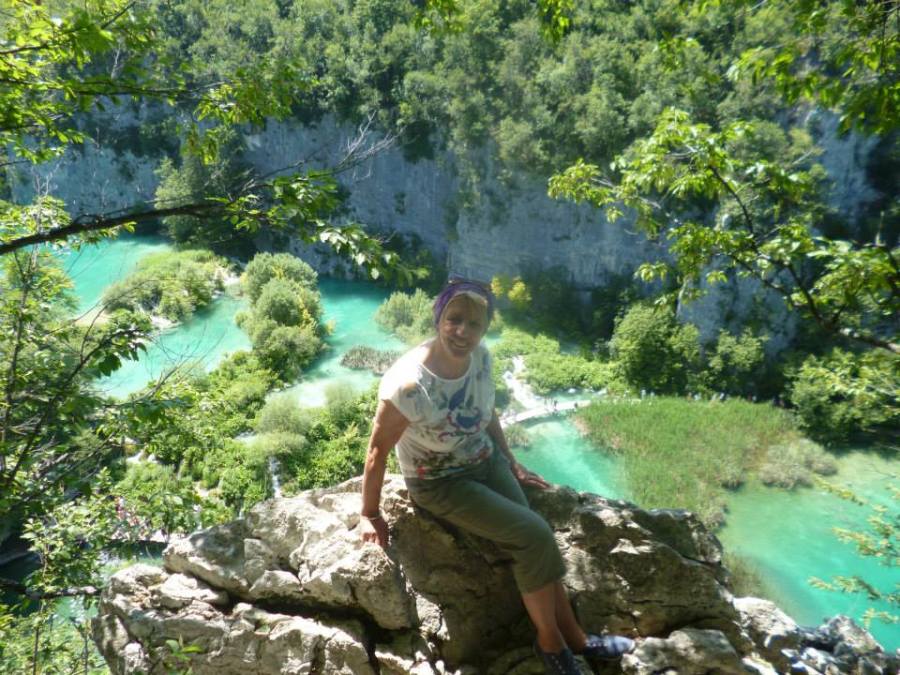
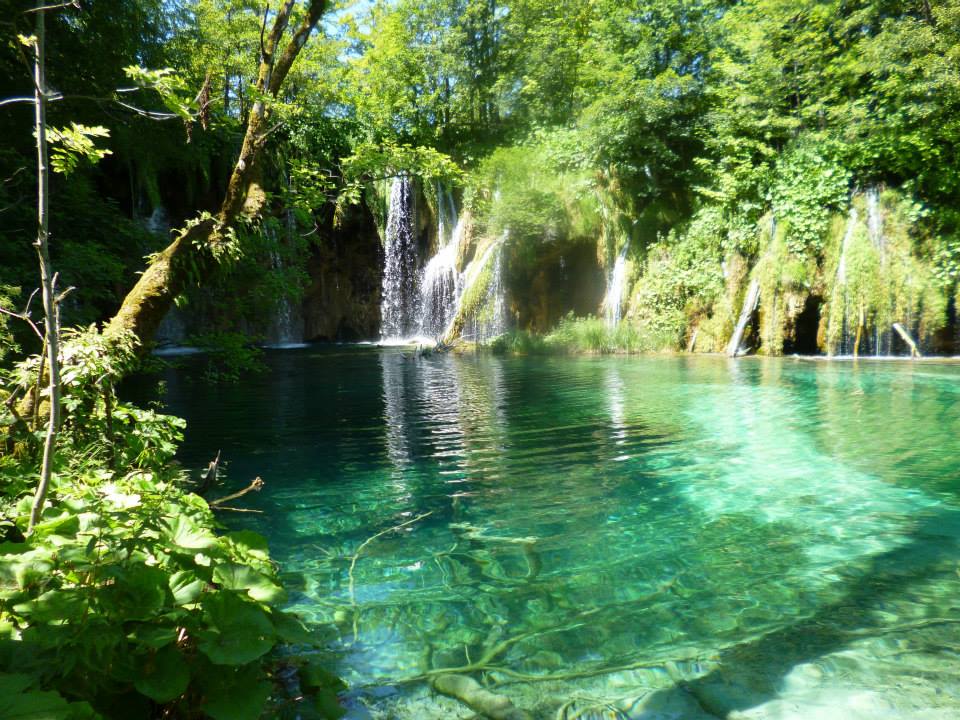
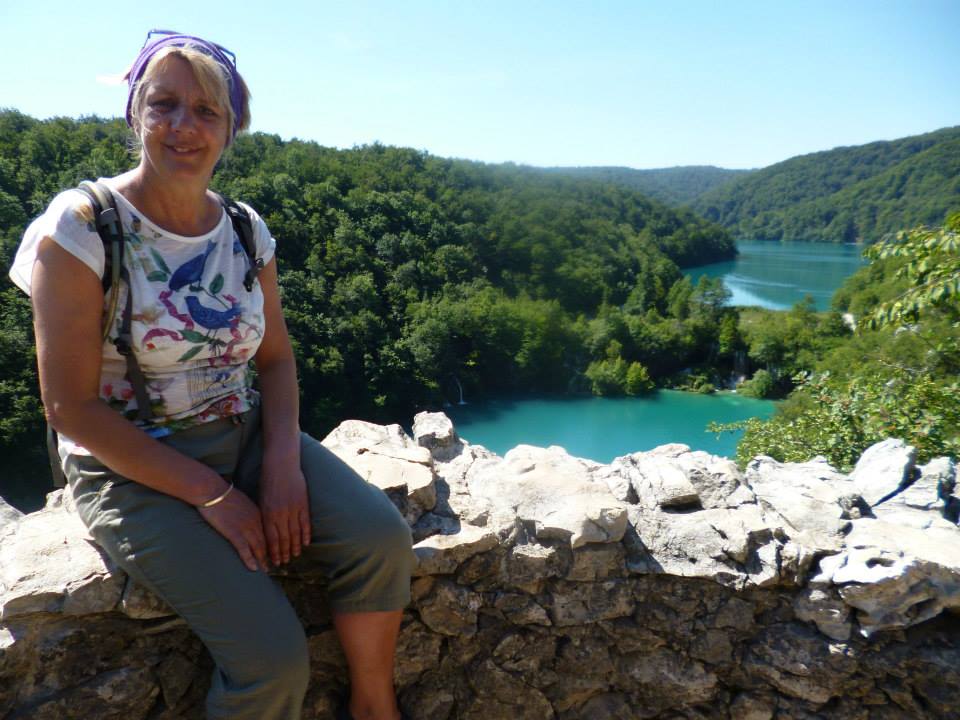
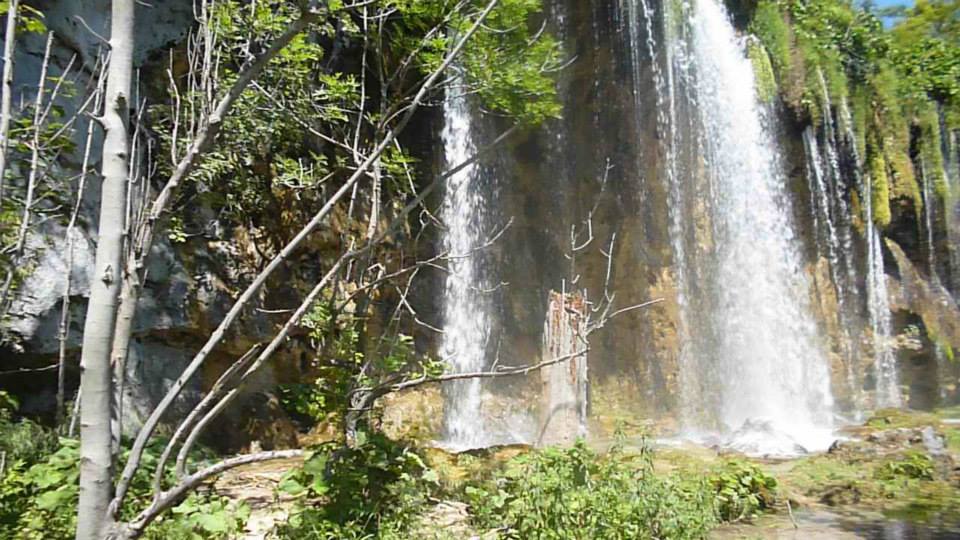
The next day, after exploring Senj, I ventured inland to Plitvice Lakes National Park. The park’s cascading waterfalls and turquoise lakes were breathtaking, yet it was sobering to reflect on its role in recent history.
On Easter Sunday, March 31, 1991, Plitvice Lakes became the site of the first armed confrontation of the Croatian War of Independence. Croatian police forces entered the park to expel rebel Serb forces that had occupied the area. The ensuing clash resulted in the deaths of one Croatian policeman, and one Serb combatant, marking the first fatalities of the war. This incident, known as the “Plitvice Lakes incident” or “Bloody Easter,” significantly escalated tensions between Croats and Serbs, contributing to the outbreak of the wider conflict. It’s a poignant reminder of how places of natural beauty can also bear the scars of human conflict.
Crossing Into Bosnia
I spent a couple of days exploring Plitvice, soaking in the quiet beauty of the lakes and forests—scenery that felt even more poignant after learning what had happened there. Then I packed up and headed toward the border, crossing into Bosnia and Herzegovina near the town of Bihać.
Bihać sits close to the Croatian border and was heavily affected during the Bosnian War.
I got slightly lost and took a wrong turn, ending up outside the local police station. Across the street stood a building peppered with bullet holes. Not a monument or a museum, just an ordinary building, scarred and silent. The war had officially ended in 1995, nearly two decades earlier, but here the past was still very much present.
These reminders became the backdrop to the rest of the trip.
A Serene Stop in Kulen Vakuf
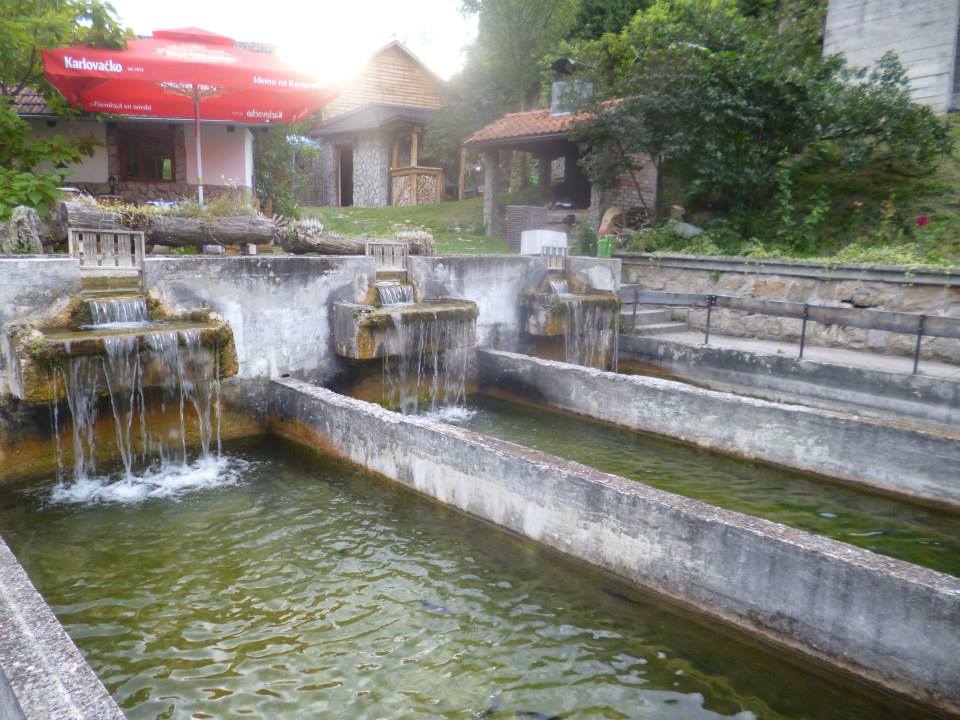
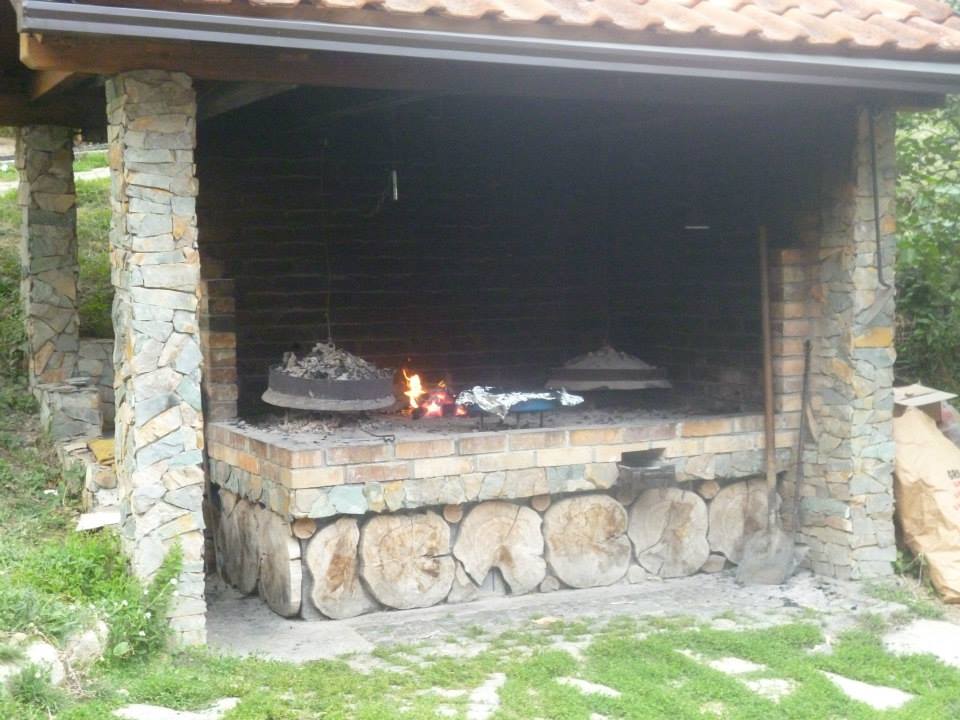
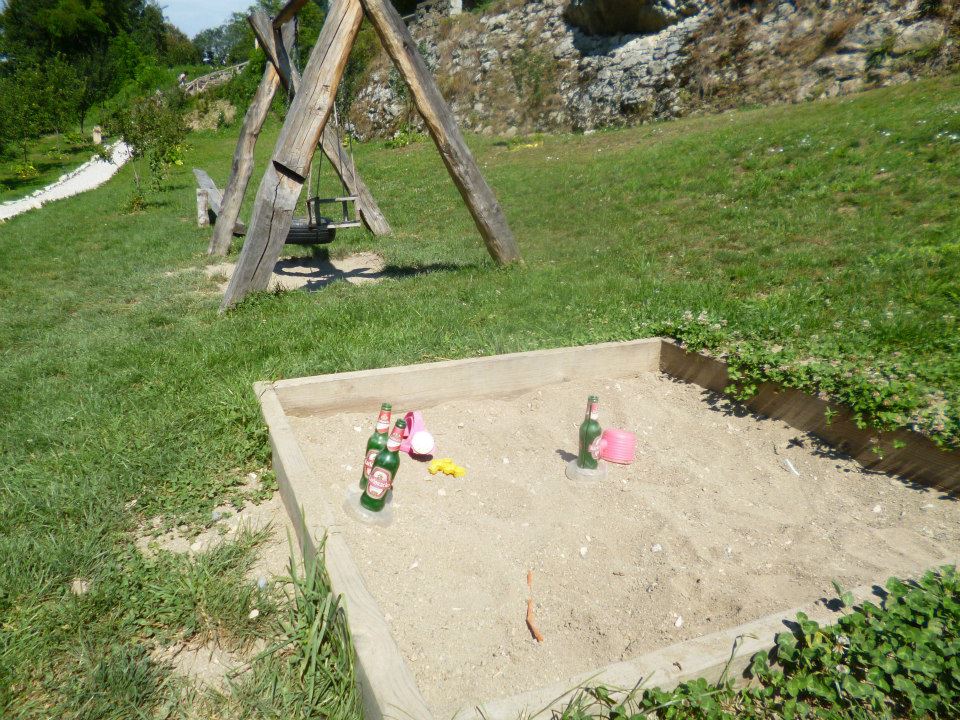
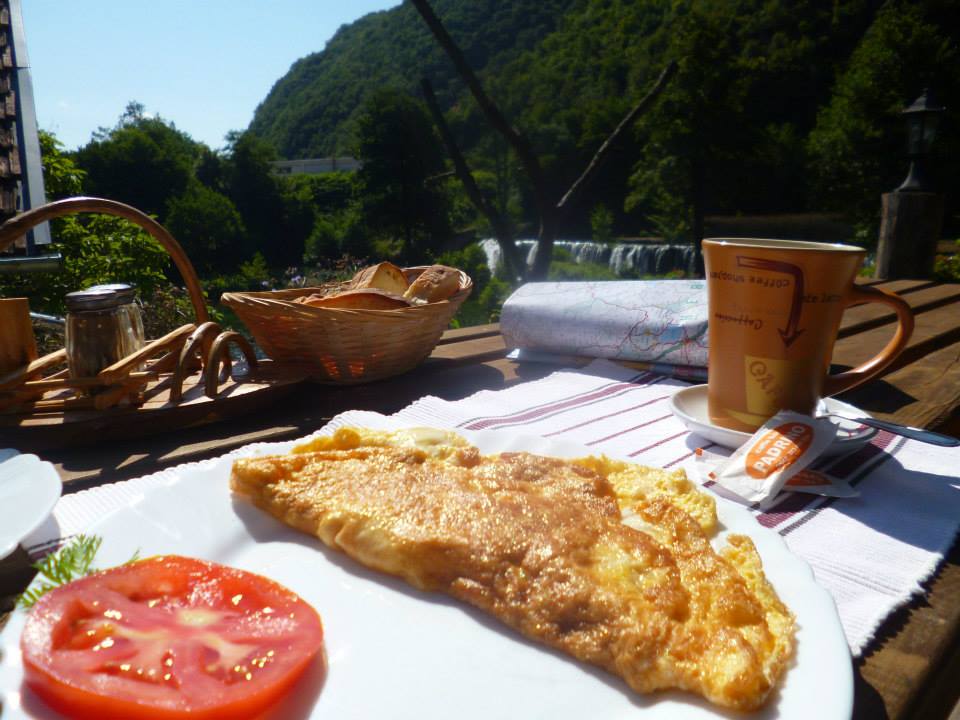
Continuing my journey south from Bihać, I found myself in the picturesque village of Kulen Vakuf, nestled along the Una River. I stopped at a local pub that doubled as a fish farm, a common sight in this region known for its aquaculture. It was early on in the day – so I opted for a late breakfast. A lovely spot to stop although the plastic beer bottles were an unusual choice of toy to put in the children’s sand pit.
Lakeside Pause at Jajce
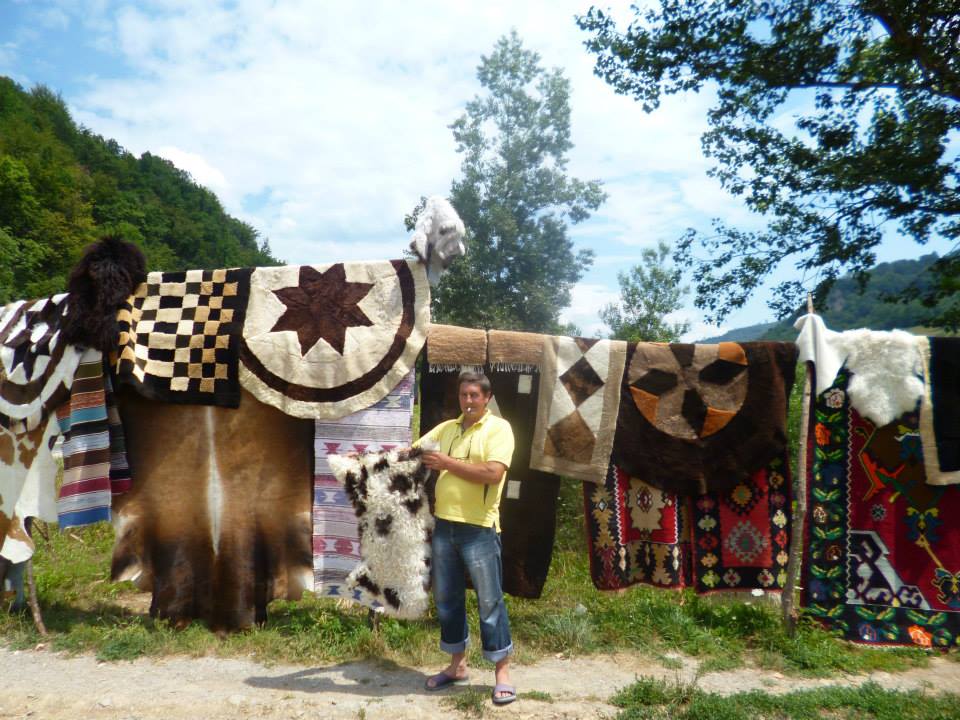
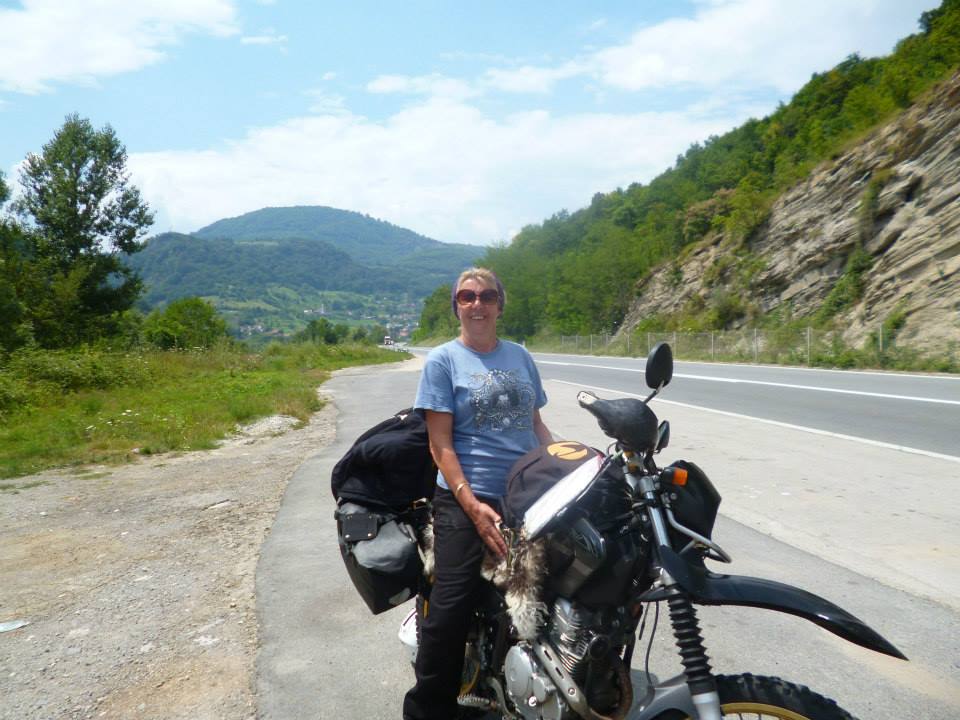
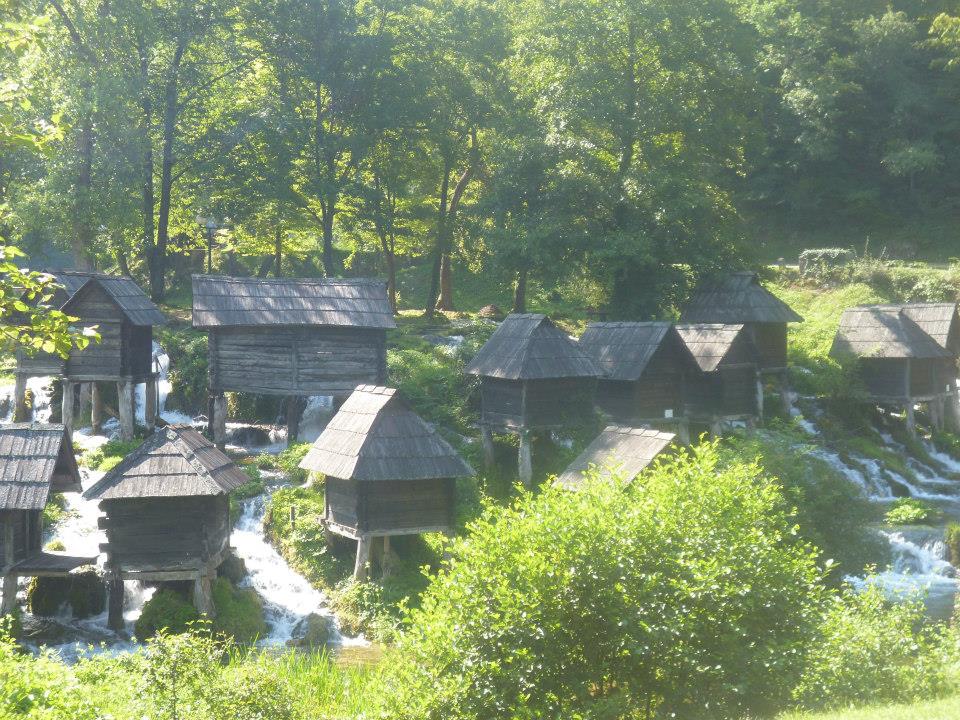
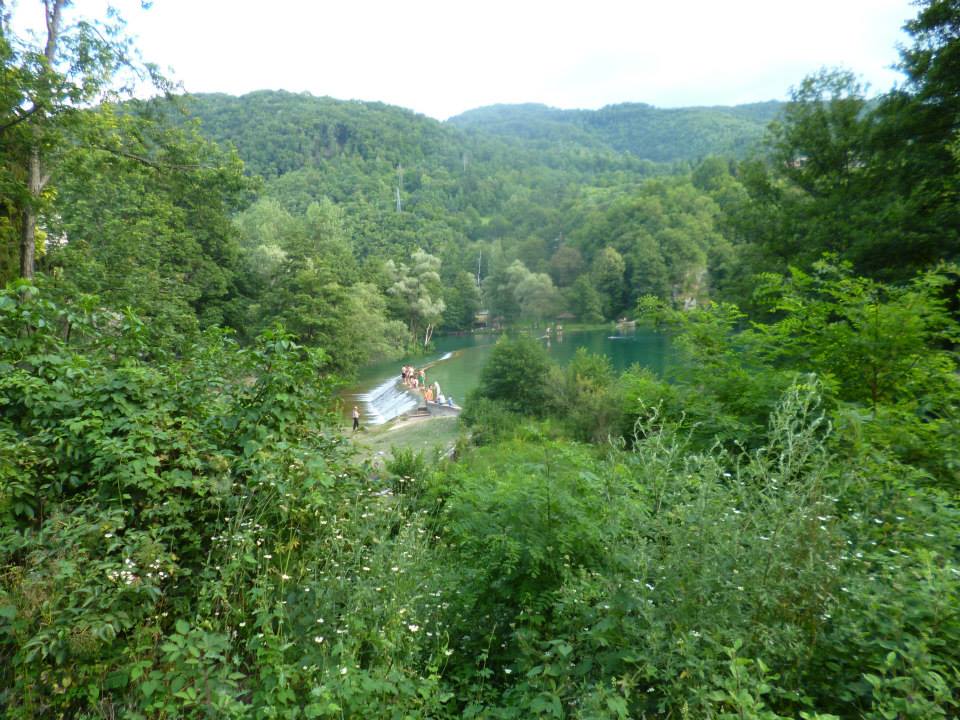
After stopping to buy a sheep?skin rug for my numbing bum, I rode on toward Jajce, a town layered with history and natural beauty. I passed lakes where local youngsters were taking the opportunity of cooling themselves off. Whilst in Jajce I took the opportunity of visiting the medieval watermills (Mlinovi). Just one cluster of mills remains today, located on the natural cascade where the water flows between the two Pliva Lakes. Apparently local farmers used the mills to grind wheat into flour right up until the Second World War.

Arriving in Sarajevo
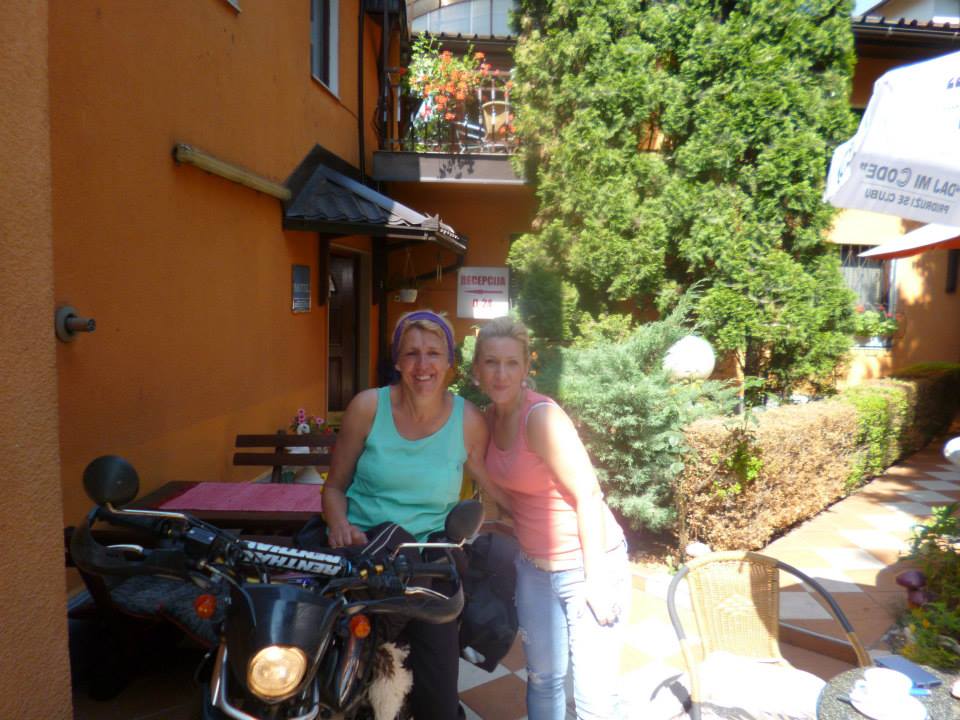
After a long ride, I finally arrived in Sarajevo, where I booked a room at a small B&B. It was just the respite I needed—time to clean myself, my clothes, and the bike. The simple pleasure of a shower and a proper bed never feels so good after days on the road.
I had brought a couple of books to read on this trip — The Cellist of Sarajevo by Steven Galloway, a fictional but deeply emotional portrayal of life during the siege, and Sarajevo Under Siege by Ivana Maček, which offered a perspective on the experiences of its people. The “siege” refers to the nearly four-year blockade of Sarajevo during the Bosnian War (1992–1996), when the city was shelled daily and its residents faced severe shortages of food, water, and electricity. Both books provided a backdrop to my approach to the city.
As I explored the city, I came across something striking—the red ‘roses’ on the pavements. These are marks made from red resin, symbolizing the places where mortar shells exploded during the siege of the city , killing civilians. Each one serves as a small memorial to a life lost, and it was impossible not to pause and think about the impact those moments still have on the city today. These ‘roses’ are a reminder of the city’s resilience.
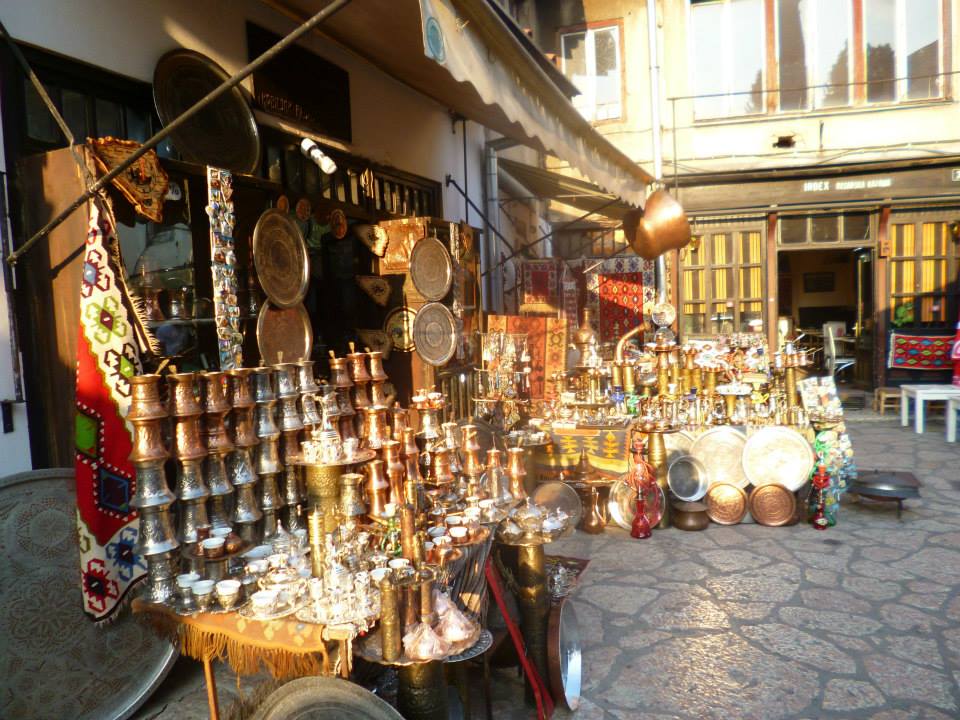
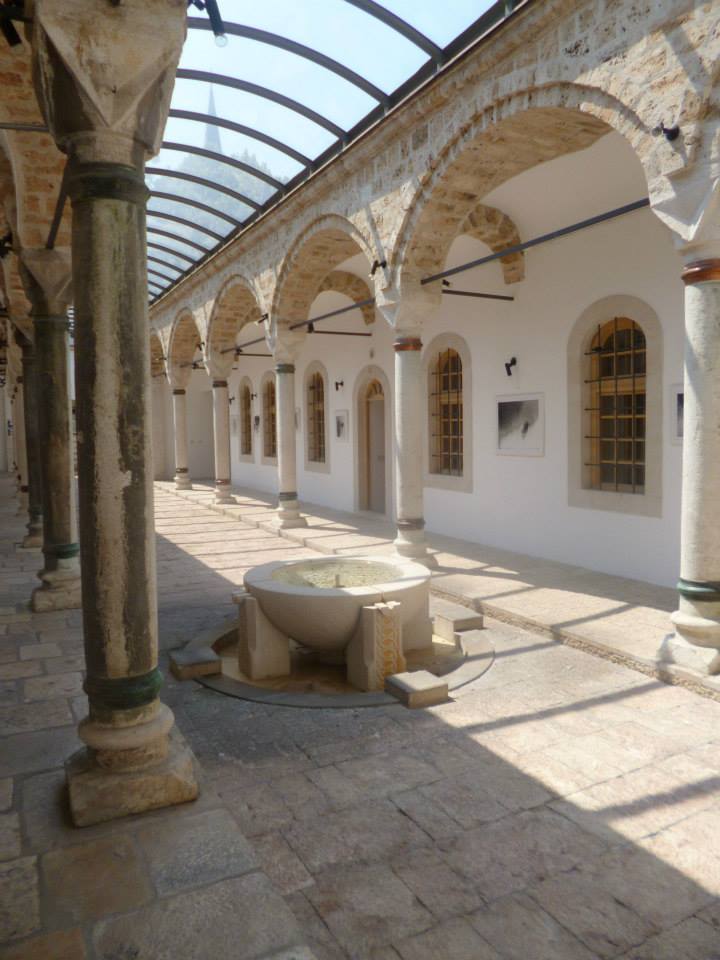
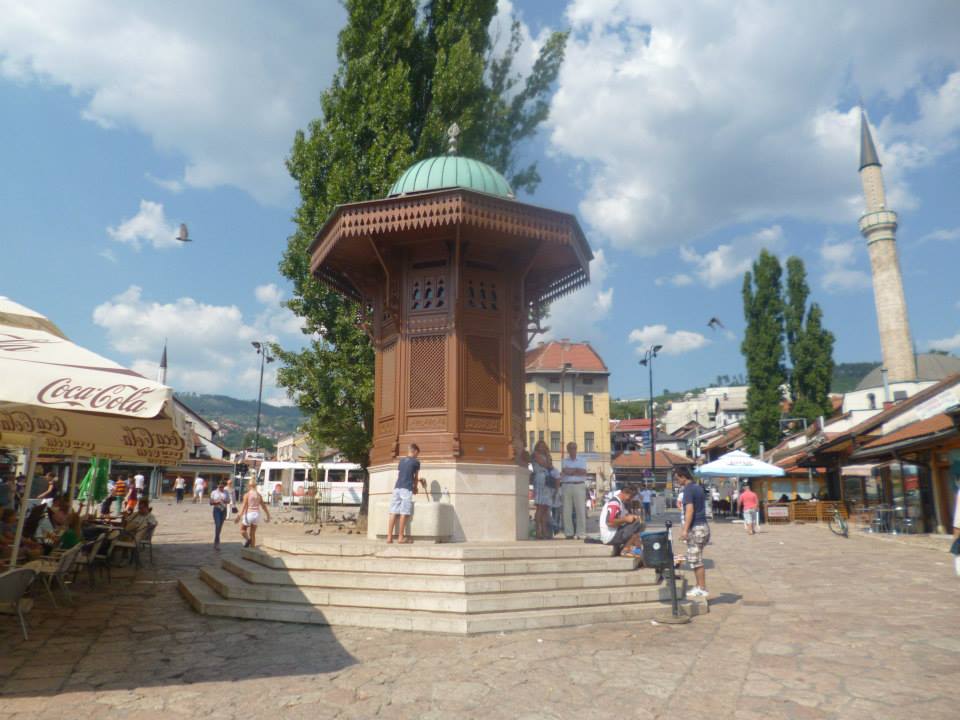
Sarajevo has witnessed the full weight of history, and it’s easy to understand why the city holds such deep significance. It was here, in 1914, that the assassination of Archduke Franz Ferdinand set in motion the events that led to World War I. And, as I wandered through the old town, past graceful Ottoman mosques and ornate Austro-Hungarian facades, I was struck by how vividly Sarajevo embodies the meeting point of East and West. It’s moments like these that remind me why I love this part of the world so much.
Next Stop: Mostar
After soaking in the sights of Sarajevo, it was time to move on to Mostar, a city known for its stunning bridge and its own unique blend of cultures and histories. I couldn’t wait to see what this next stop would hold.
A Tricky Ride to Mostar
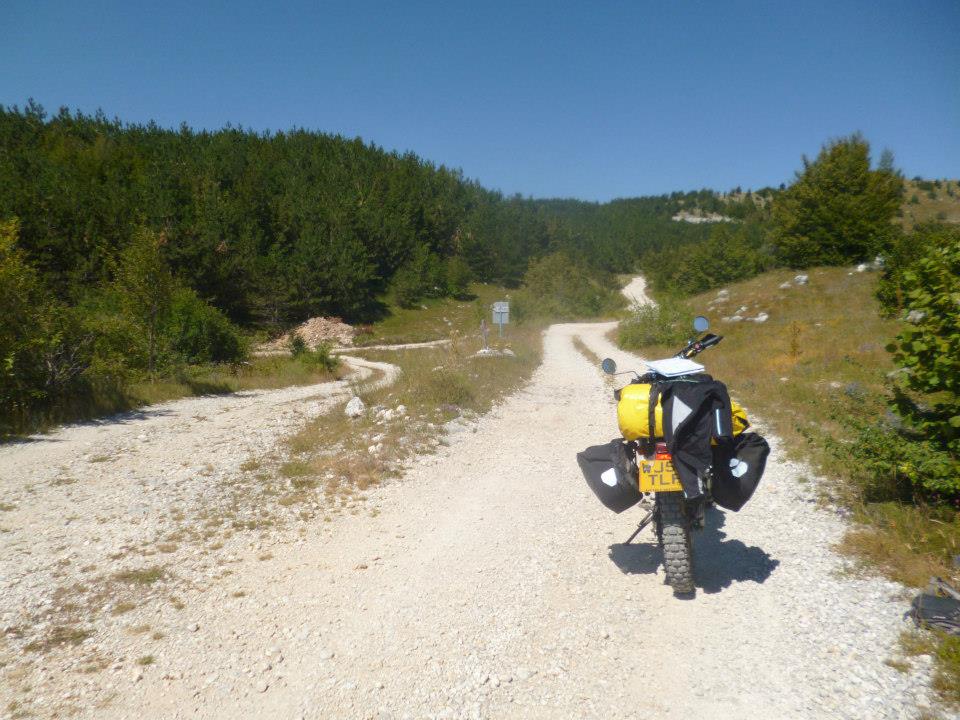
The ride from Sarajevo to Mostar wasn’t going to be a simple journey. I deliberately avoided the main roads, choosing instead a more rugged path through mountainous terrain and rough, bouldered tracks. It was slow-going, and my overloaded Yamaha Serow was struggling to keep up with the uneven, sometimes treacherous ground.
At one point, I thought I wasn’t going to make it. The path narrowed, and the boulders grew larger, my bike’s wheels slipping and sliding with every attempt to push forward. I could feel the weight of my luggage, and it seemed like the trail was never going to end. My heart raced as I fought to keep control.
But then I remembered the words of Dazzer Mitchell, a friend and trail bike ride leader in the Yorkshire Dales, who always shouted to give it “Gas, Gas, Gas!” when the going got tough. With nothing to lose, I twisted the throttle, gave it everything, shouted “Gas, Gas, Gas!” and somehow, miraculously, stayed upright. It was a moment that still makes me break out in a cold sweat thinking about it, but it was also a victory of sorts.
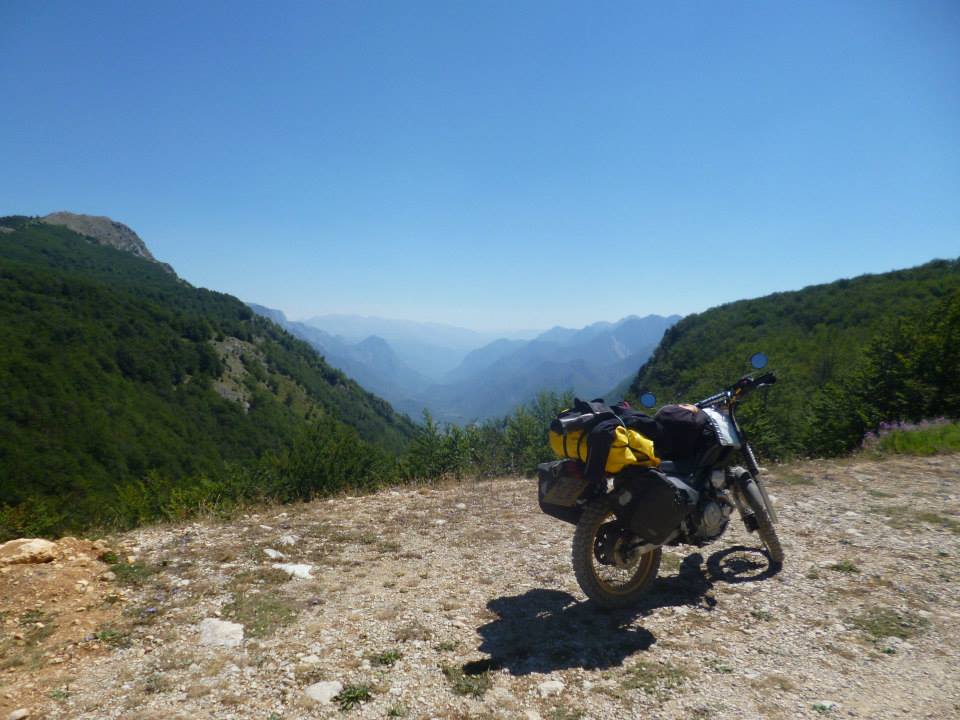
The views that followed were still spectacular—vast valleys, rugged peaks, and endless horizons. But that moment of fear stayed with me, and by the time I finally made it to Mostar, the relief was palpable.
Mostar: A Bridge of Resilience
When I arrived in Mostar, I’m not sure if it was the exhaustion from the rough journey or the impact that Sarajevo has had on me, but I really felt the weight of the city’s history. The Stari Most (Old Bridge), a once beautiful structure now reconstructed after its destruction in the Bosnian War, stood as a poignant reminder of the past. I could still picture the images I’d seen on television of the bridge being bombed. It was a symbol not just of architectural loss but of the deep, painful divide that the war left in its wake.
Mostar, before the war, was a city of remarkable multiculturalism, with Bosniaks, Croats, and others living side by side. The bridge itself had symbolized the connection between the two halves of the city—the Bosniak side on the east, and the Croat side on the west. People from different faiths and backgrounds worked, lived, and celebrated together. This multicultural harmony was reflected in the city’s diverse religious sites: mosques, Catholic churches, and Orthodox churches coexisted peacefully, and people communicated in multiple languages.
But the Bosnian War changed everything. The city became a battlefield, with the Croats and Bosniaks fighting over control. Mostar was divided, both physically and emotionally. The Stari Most was destroyed in 1993, a symbol of the break between these communities.
The people diving off the reconstructed bridge, laughing and having fun, brought some levity to the moment, but I couldn’t shake the weight of the past. Even now, decades later, divisions remain in Mostar. Despite efforts to rebuild, politically and socially, the city still feels the remnants of the war. The Croatian and Bosniak communities live in different parts of the city, often with limited interaction, and tensions over identity and politics continue to affect the city’s dynamics.
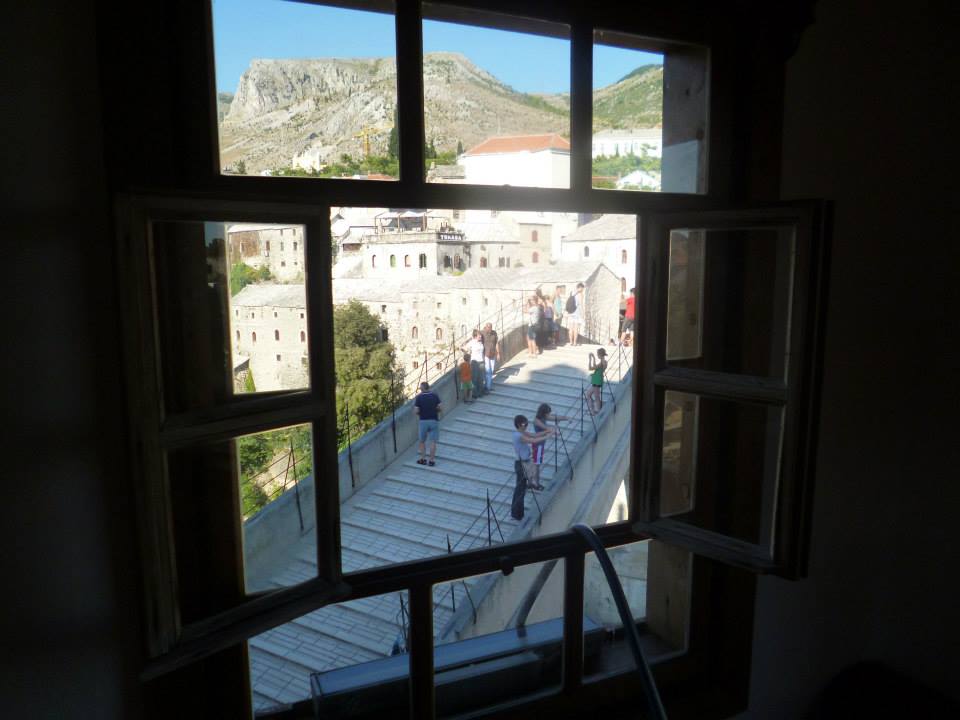
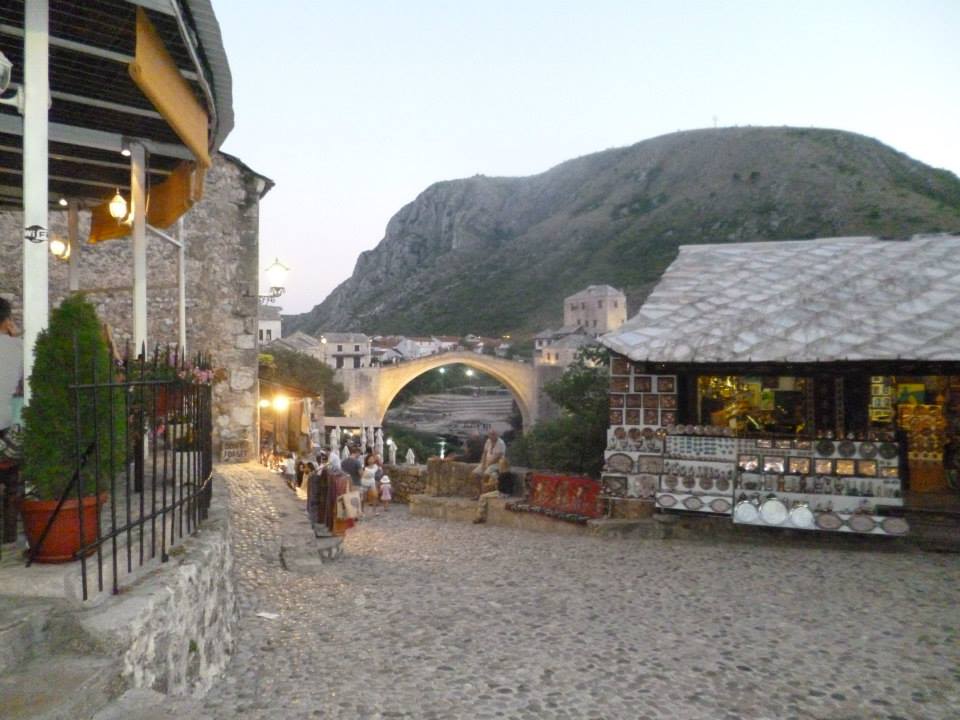
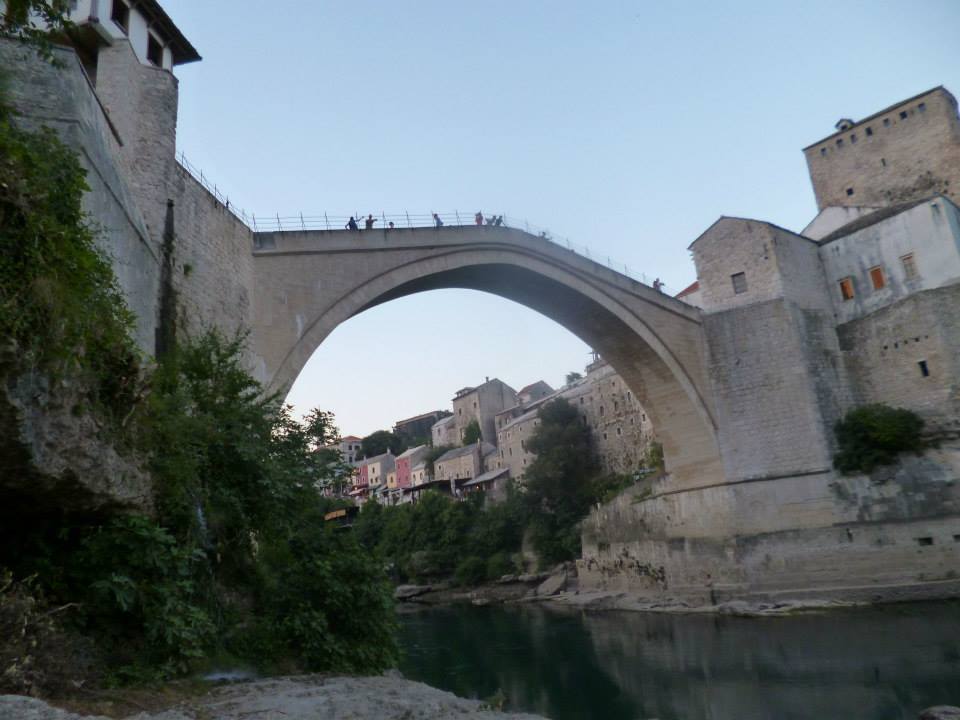
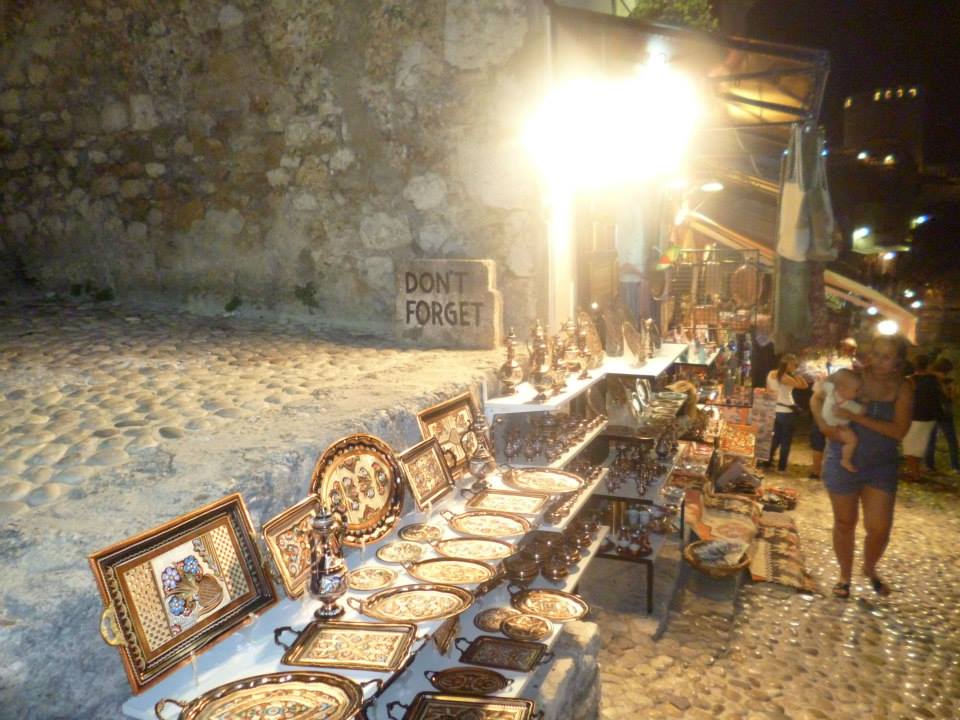
It was a stark reminder of how fragile peace can be, and how history shapes even the simplest moments of a journey.
From Remembrance to Celebration: Experiencing the Sinjska Alka Festival
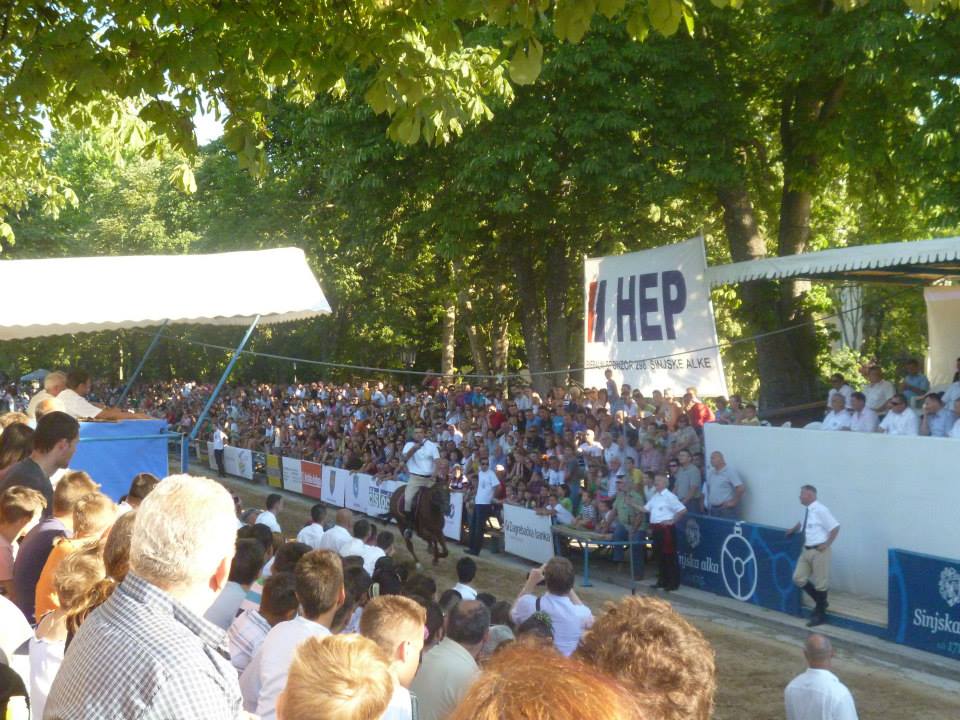
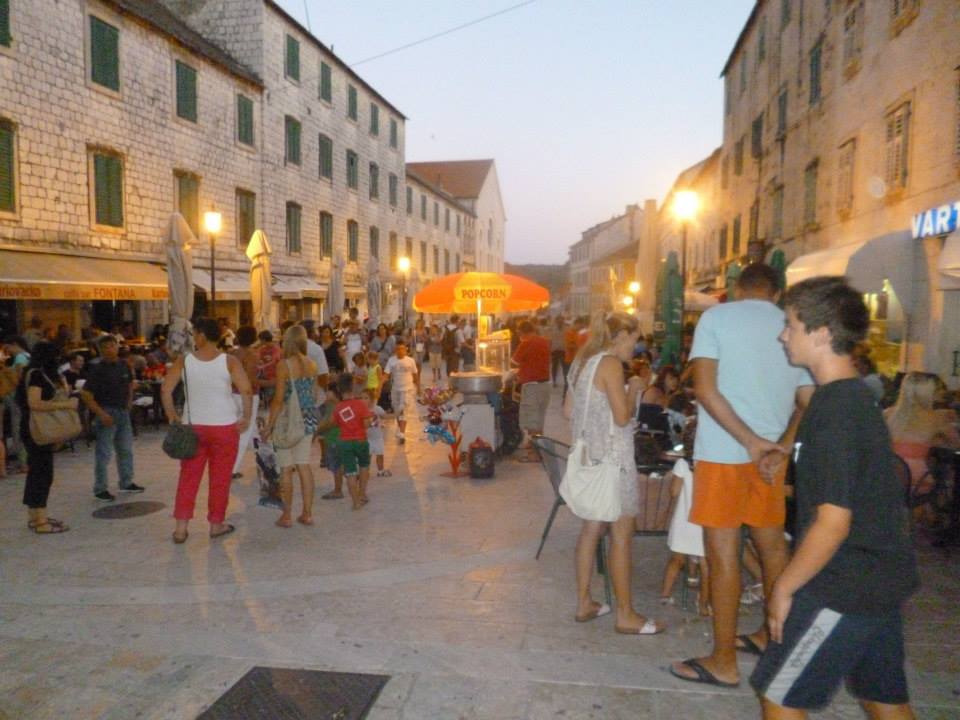
After the heaviness of Mostar, I arrived in Sinj just in time for the Sinjska Alka festival—and what a shift in mood it was. The whole town was buzzing, people out in their finest, flags flying, food and music spilling into the streets. I watched as riders in traditional costume thundered down the course, aiming their long lances at a small metal ring suspended in the air. The oohs and aahs of the spectators as each jouster hit or missed the target were infectious—it was a joy to be part of the crowd, swept up in the rhythm of centuries-old tradition. This tournament has been held since 1715, commemorating a victory over the Ottomans. This was another reminder that this region has always been where East meets West. It’s one of the things I love most about travelling in this part of the world: that constant sense of history, where empires clashed and cultures mingled.
From the EU to Montenegro
After Sinj, and stopping for a night in the off-season ski resort town of Kolasin, I crossed the border into Montenegro, my first exit from the EU on this journey. I was a bit nervous about it—leaving the comfort zone of the EU meant a new set of rules and, perhaps, some unexpected hurdles. I did need to get my passport stamped, which made the border feel a little more official and serious. But thankfully, Montenegro had a reciprocal agreement with the EU, so the crossing wasn’t as complicated as I feared.
I also had to get used to the fact that Montenegro doesn’t use Croatian Kuna but the Euro. I was relieved not to need to worry about exchanging money or the usual currency confusion at the border.
But it was still a moment of transition, leaving one world behind and entering another. My first border crossing on the trip—it was a small, but significant milestone.
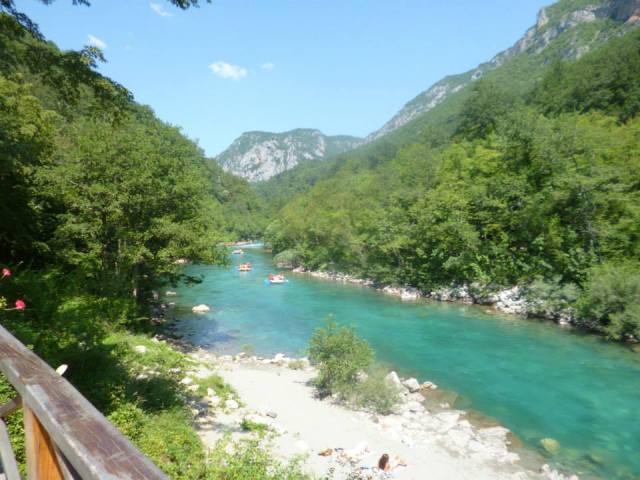
After the previous week’s challenges both physically and emotionally, arriving at Kamp Apartmani Razvršje near Žabljak felt like stepping into a different rhythm. Tucked among the pine forests at the edge of Durmitor National Park, it was a peaceful, low-key place where the campers were already in holiday mode. At first, I felt a bit out of step—my head still full of the road—but it didn’t take long to adjust. I didn’t do much, and that was exactly the point. I spent a couple of lovely days simply unwinding, watching white-water rafters from a distance, and enjoying the slow pace. The hosts were kind, and I still remember the bowls of enormous, sweet strawberries they served—after meals, between meals, sometimes just because. A small but perfect comfort.
A Stop in Trebinje
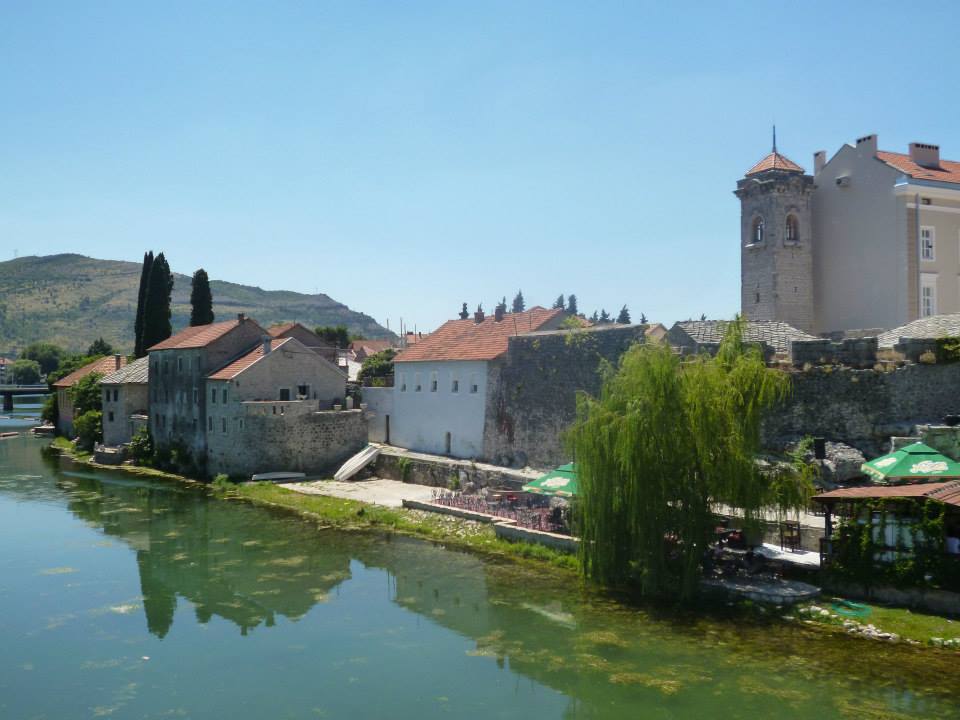
Heading back down to the coast, I decided not to go all the way to Dubrovnik. It was peak summer, and I knew it would be crowded. Instead, I stopped off at Trebinje, a town about an hour inland. I hadn’t heard of it before, but it turned out to be a great decision.
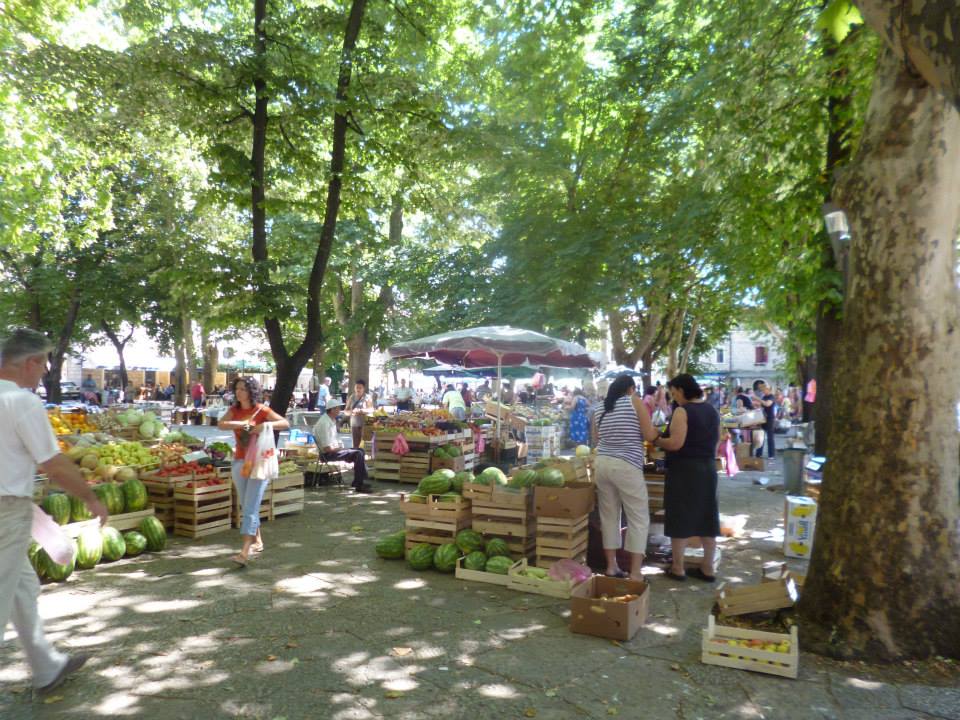
It had a gentle, local feel. The central square was busy but relaxed, and I spent the evening at a small restaurant, watching the town go by. Couples young and old, families with pushchairs, teenagers in groups all taking part in the evening promenade. I ordered a pljeskavica — a juicy grilled meat patty with flatbread and salad — and it hit the spot.
Split and the Decision to Take the Boat
Arriving in Split, I found a space in a busy campsite. The hustle of the place felt like a different world. Not wanting to face the crowded coastal roads back up to Rijeka, I decided to take the ferry, the MF Liburnija, instead.
The ship wasn’t large or luxurious, but it had its charm. One unexpected treat was the dining room. A waiter, with a cloth draped over his arm, gave me a taste of wine to sip before pouring it—it felt like stepping back in time. Like most passengers, I chose to sleep on deck, enjoying the sea breeze and the view of the stars.
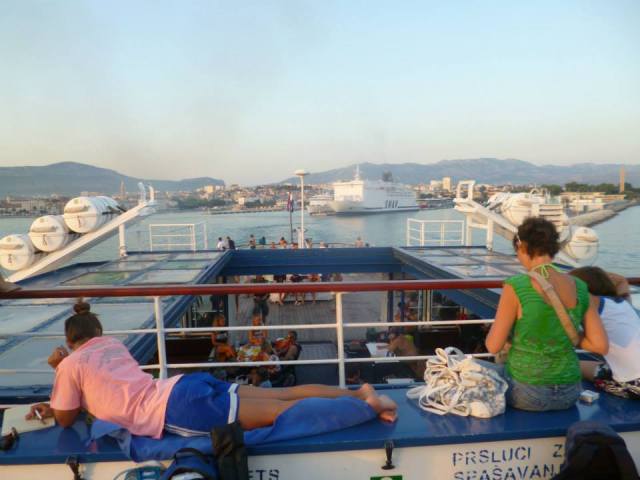
In the middle of the night, I was suddenly woken by the sound of a woman wailing. I learned that it was the partner of a man who had fallen overboard! It was a tense hour as the boat circled around searching for him. Thankfully, he was found, and it turned out to have been the result of a lovers’ tiff. In the morning, he was wrapped in a blanket, looking sheepish. I suppose the boat captain wouldn’t have been too pleased about the delay and the report he’d need to file—it was definitely more work than he had planned for.
Similarly to the Autoslaaptrein which brought me down to Slovenia, the MF Liburnija was a veteran of the 1960s. With its simple car deck, wood-trimmed cabins, the ferry had the same nostalgic charm as the train. By 2015, both were gone—retired and decommissioned, their routes taken over by faster, newer but less characterful options. Looking back, it feels as though I caught the last breaths of that era of slow travel.
The Journey Home
The boat eventually arrived at Rijeka, a port town in northern Croatia, where I met up with Rich and his partner, the couple I’d travelled down with on the train. It was nice to reconnect after the adventure, and we shared a meal and a drink.
As for the journey back, my recollections blur a bit. It was essentially the reverse of the trip down. I took the same train to Den Bosch, then rode to Rotterdam before catching the ferry back to Hull.
_________________________________________________
At the start of this story, I posted a photo of me standing by the Autoslaaptrain train, and here’s one of me on the train back. It’s amazing the effect a trip like this can have on a woman of a certain age!

I hope you’ve enjoyed reading this; I’ve certainly enjoyed reminiscing on this adventure.
At the time, when I got back to work after trips like this, colleagues would ask, “So, how was your holiday?” And, all I could really think of to say was “Well yes, it was interesting!”
I’m glad I’ve finally been able to answer that question fully.
Some Recommended Highlights
- Sinjska Alka Festival
- Durmitor National Park – Montenegro
- Man in Seat 61 Not the Autoslaaptrain but a good resource for train travel in Europe
- Plitvic National Park
Reading List
- The Cellist of Sarajevo by Steven Galloway
- Sarajevo Under Siege by Ivana Maček,
With thanks to ChatGPT for helping research, structure, and grammar check this post.
 No Route Map: Still Learning, Still Looking
Pingback: Motorcycle Adventures – The Beginning – No Route Map: Still Learning, Still Looking