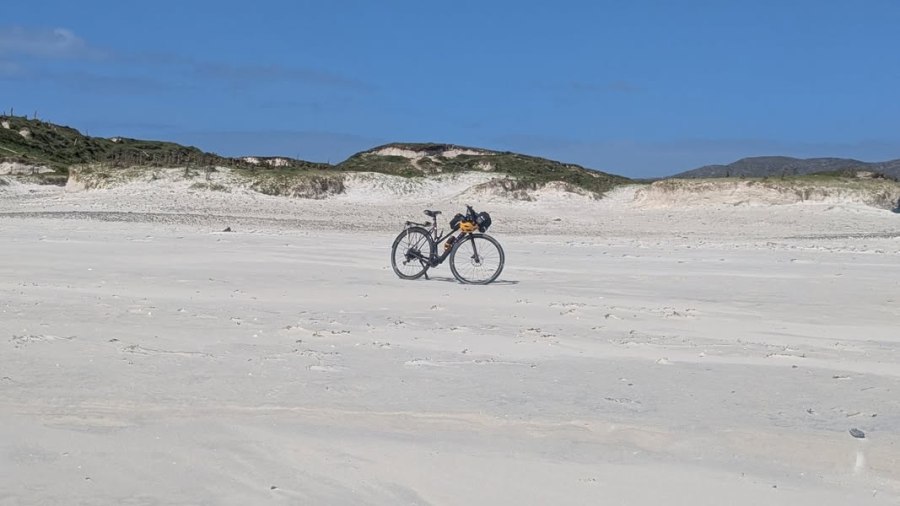
Straight Roads, Stone Circles
After breakfast, Philly headed off for her morning swim while I packed up the bike once more and set off south on the Hebridean Way. Retracing my route from the previous day, I quickly understood why the advice is to ride this journey from south to north. Lewis is often described as flat, which sounds appealing until you’re riding into a headwind all day. There’s something worth saying here about why I, and many other cyclists, often prefer a hillier route. Climbing can be hard work, but it’s more than compensated for by the pleasure of freewheeling downhill. On flat ground, the pedals need constant attention. Add a strong headwind and there’s no let-up at all.
The treeless landscape offered no shelter, so the southerly wind I had been warned about was a steady, unbroken presence. Even on the slight downhills I found myself still pedalling. And a brief note about the bike. Yes, it’s an e-bike, but it’s pedal assist, which means the motor only helps when the pedals are turning. I’m also always mindful of battery life on these journeys, so I use the assistance sparingly through the day and only run it down towards the end if I know I’m nearly finished.
It was only 32 miles to my next destination, but it was a hard slog and, not for the last time on this trip, I found myself wishing I was doing it on a motorbike. Being Sunday didn’t help. There were no cafés, craft shops, tourist information centres, nothing at all to distract me. Earlier, though, I had seen a Tesco delivery van on its way up to Port of Ness and I swear I could feel the vibrations of curtains twitching.
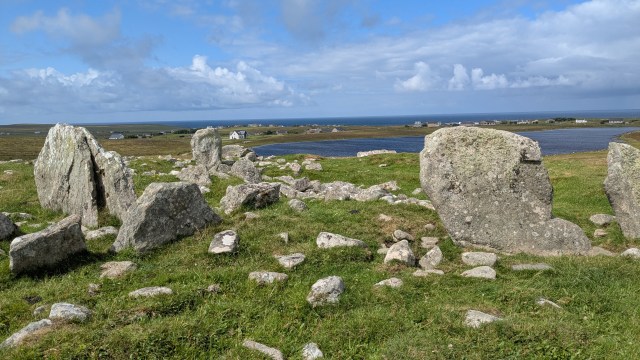
I stopped briefly at Steinacleit, a prehistoric archaeological site where an information board helpfully explained that no one really knows why it was there. Still, it made for an atmospheric pause.
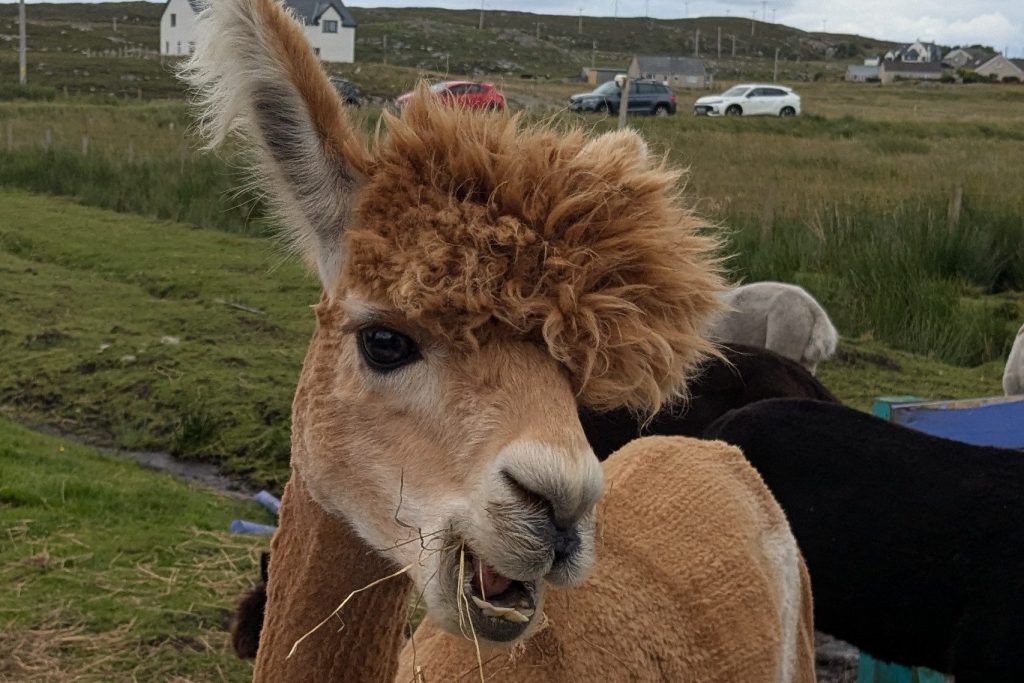
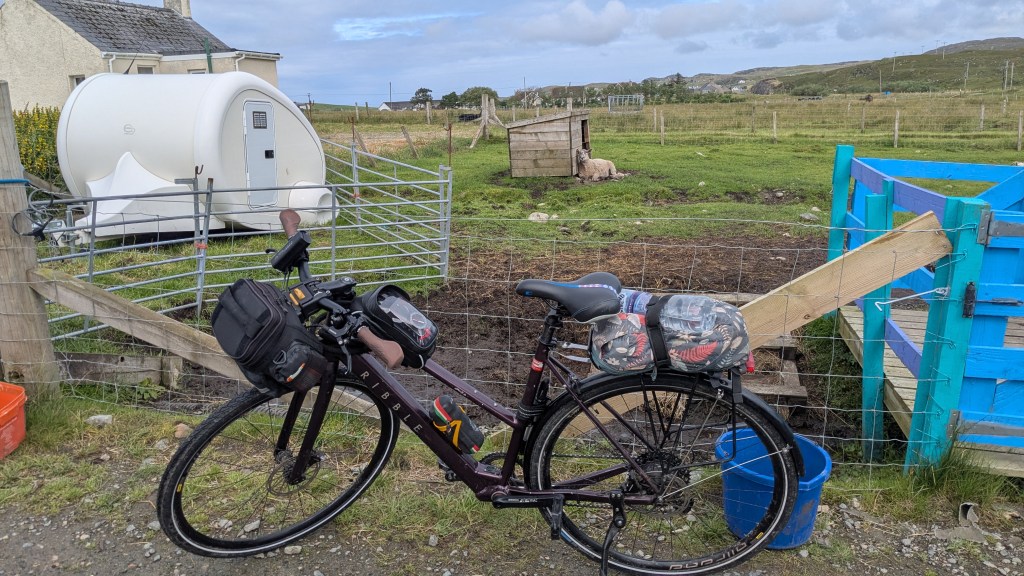
I was mightily relieved to arrive at my destination for the night: Callanish Alpacas. This wonderfully quirky venture is run by Clare, her partner Martyn, and a small team of volunteers. Alongside the alpacas, they rescue and rehome an eclectic mix of animals: rare-breed sheep, pigs, chickens, ducks and turkeys, plus a peacock and several peahens.
They’ve developed a visitor centre with a small café which, miraculously, was open despite it being Sunday. After a hot mug of coffee, Clare showed me to my accommodation for the next couple of nights. I had a choice: a teardrop caravan or a space on a turquoise double-decker bus. Clare also generously provides her overnight human guests with bottomless lentil dahl, naan bread, and unlimited tea and coffee, all set up in the visitor centre shop.
Once I’d settled in, I set off on the short walk to the Calanais Standing Stones. It was early evening and there was only one other person there and we quietly made sure not to intrude on each other’s enjoyment of the place.
In the past, people thought that the stones were men turned to stone as punishment; later it was claimed that it was a Druid temple. Archaeology has shown that the stone circle was built around 2900 BC, with the cairn added some 500 years later, and the rows likely part of the same phase. Calanais does predate Stonehenge’s great stones, but it’s broadly contemporary with Stonehenge’s earliest bluestone circle.
The stones are made even more striking by their setting, perched on a ridge leading up to Cnoc an Tursa, a natural hill with a cave-like feature and wide-reaching views over Loch Roag. I soaked in the atmosphere for quite a while before heading back to my little teardrop bed for the night.
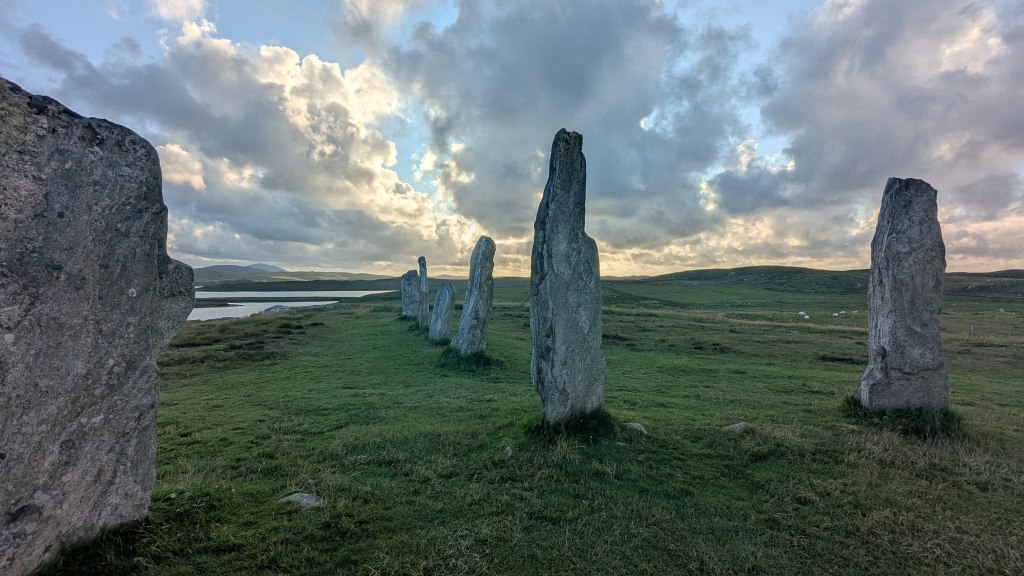
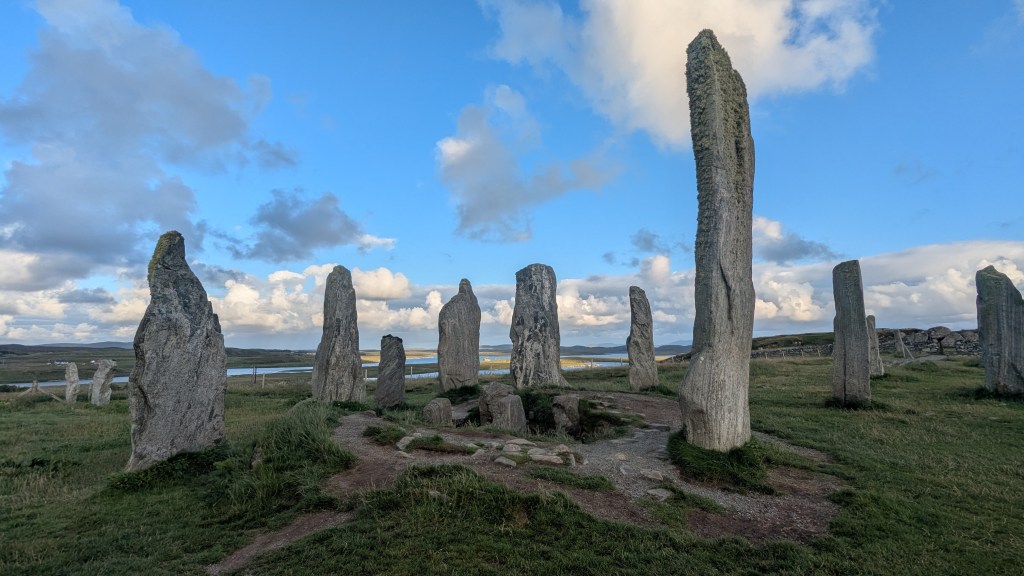
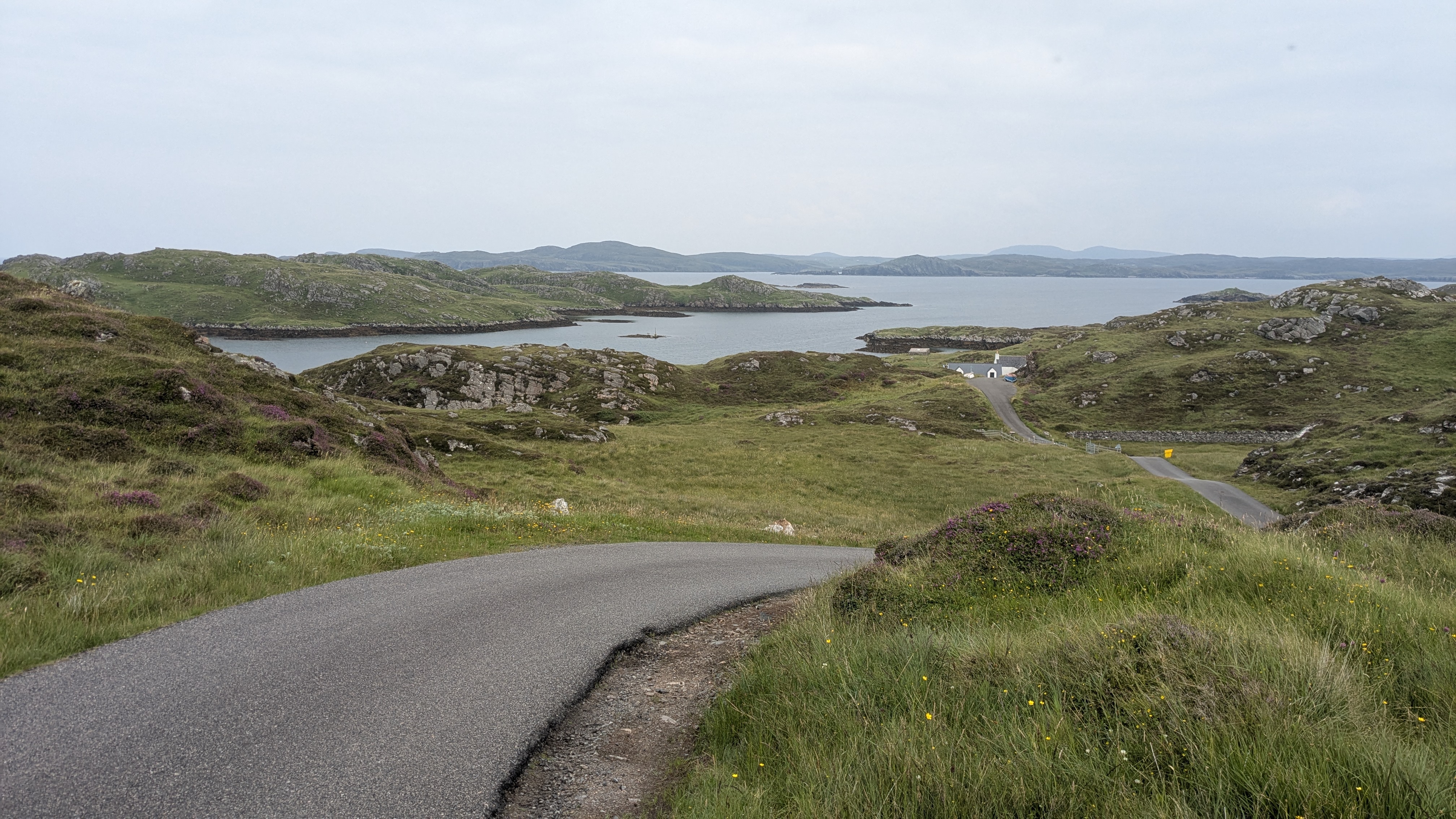
I took the next day off to explore Great Bernera. I passed the (closed) Calanais Visitor Centre and the Bernera Community Centre Cafe, which, being the third Monday of a month without an R in it was closed. Just an observation. Still it was good to ride the bike without luggage and stretch my legs on a walk over the headland to Bosta Beach.

 No Route Map: Still Learning, Still Looking
Really interesting read and honest reflection on a difficult and challenging but ultimately rewarding ride. Well done, Deb. Keep it up.
LikeLiked by 1 person
Thanks Liz!
LikeLike